Innovation, War Development and the Future Force
The Royal Signals Institution Spring Seminar 2026 brought together senior military leaders, industry partners and technical specialists for a full day of discussion focused on one of the Army’s most pressing challenges: how to adapt at pace to a rapidly changing character of warfare.
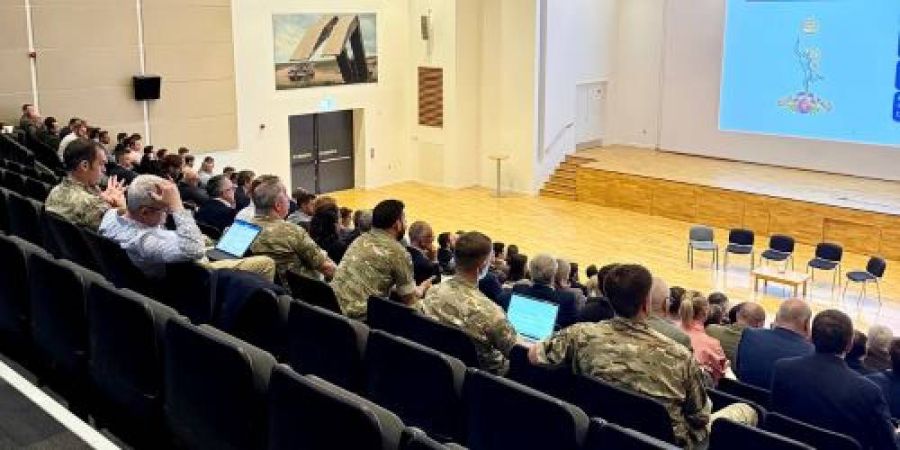
Held at Tidworth Garrison Theatre on 21 May 2026, the seminar explored the theme of Innovation and War Development (WarDev) — the process by which lessons from operations, experimentation and real-world conflict are rapidly translated into capability and operational advantage.
The event reflected the RSI’s core purpose: fostering professional dialogue between Defence and industry while supporting the professional development of the Royal Corps of Signals.
A shift towards data-centric qarfare
A recurring theme throughout the day was the Army’s transition from platform-centric to data-centric warfare.
Speakers highlighted how future operational advantage will depend not simply on possessing sophisticated platforms, but on the ability to collect, process and exploit data faster than an adversary. Across every domain, the speed and quality of decision-making is becoming increasingly decisive.
This shift is driving significant transformation across Defence, including the establishment of the Director Digital, Security and Intelligence (DDSI), greater emphasis on digital integration, and increasing use of artificial intelligence, autonomous systems and distributed networks.
The strategic context underpinning this transformation is stark. The return of large-scale conflict in Europe, coupled with persistent global instability and rapid technological change, has reinforced the urgency of modernisation. Reference was made to the Chief of the General Staff’s ambition to double the Army’s fighting power by 2027 and triple it by 2030 — with much of that uplift expected to come through technology, digital integration and improved exploitation of information.
From fragmentation to coherence
Several speakers acknowledged that digital activity across the Field Army has historically evolved in a fragmented manner — often described as a “cottage industry” of isolated projects and initiatives.
The challenge now is achieving coherence.
Discussions focused on the growing importance of common architectures, data standards and governance structures that enable innovation to scale effectively across Defence. The establishment of stronger digital governance, including the Army Digital Authority, was highlighted as a key step towards reducing duplication and improving interoperability.
Initiatives such as the Defence Targeting Web and Project ASGARD were repeatedly referenced as examples of how Defence is seeking to create unified data environments capable of supporting faster and more integrated operational decision-making.
The seminar also reinforced that many existing capabilities remain underexploited. Both military and industry speakers highlighted the need to better integrate systems already in service, rather than solely focusing on the acquisition of entirely new technologies.
WarDev and the “20-40-40” force
One of the most discussed concepts of the day was the emerging “20-40-40” construct for future force design.
This model envisages:
- 20% survivable crewed platforms
- 40% adaptable, lower-cost systems
- 40% consumable capabilities such as drones and autonomous assets
The model reflects lessons from contemporary conflicts, particularly Ukraine, where the rapid deployment of low-cost and scalable technologies has transformed operational tempo and resilience.
Alongside this, speakers explored the distinction between War Development and traditional Capability Development.
While Capability Development delivers major programmes over longer timescales, WarDev focuses on rapidly improving existing capability through experimentation, adaptation, training and operational learning. The challenge lies in linking the two effectively — ensuring that lessons identified in today’s operational environment are rapidly incorporated into tomorrow’s force design.
Innovation through partnership
The relationship between Defence and industry formed another major theme throughout the seminar.
There was broad consensus that innovation at pace cannot be achieved without closer collaboration between the Army, industry and academia. Speakers stressed the need for earlier engagement, clearer communication of operational problems, and more agile approaches to experimentation and capability insertion.
The afternoon sessions provided practical examples of this partnership in action, with contributions from 1 (UK) Signal Brigade, Army CEMA Group, 7 Signal Group and 1 Signal Regiment demonstrating how operational formations are already adapting to evolving technological and operational demands.
Discussions also highlighted enduring challenges around cyber resilience, network survivability and supply chain assurance — all areas where collaboration with industry will remain essential.
Culture, learning and professional development
Beyond technology, the seminar repeatedly returned to the importance of culture and professional development.
Innovation is not simply about acquiring new equipment. It requires people who are curious, adaptable and prepared to challenge established approaches.
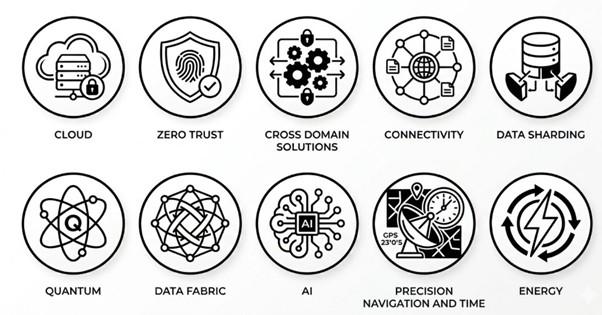
Initiatives such as the Army’s “Top 10 Technologies” framework were discussed as a way of encouraging greater understanding of emerging technologies and building a shared professional language across Defence and industry.
The day concluded with a strong sense that while significant challenges remain, momentum is building. The Army increasingly recognises the need to modernise not only equipment, but also structures, processes and ways of thinking.
For the Royal Signals Institution, the seminar once again demonstrated the value of bringing together military practitioners, industry specialists and professional networks to debate the future of Defence communications, digital capability and information manoeuvre.
As warfare continues to evolve, so too must the partnerships, thinking and professional dialogue that underpin operational success.