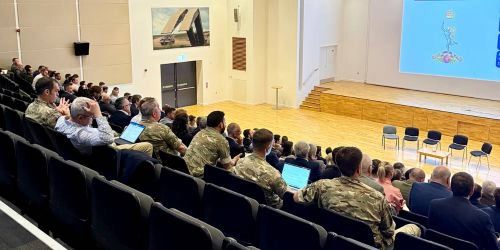
The Royal Signals Institution recently welcomed an expert panel from 13th Signal Regiment (Cyber) to deliver a comprehensive and highly relevant briefing on the Regiment’s role, capabilities, and future direction within Defence’s cyber enterprise.
Bringing together operational insight, technical depth, and strategic context, the session offered attendees a valuable understanding of how Defensive Cyber Operations (DCO) are evolving to meet the demands of an increasingly contested and complex digital battlespace.
A regiment at the heart of defence cyber
The session opened with an overview of 13th Signal Regiment’s mission and responsibilities. As the Army’s lead for DCO, the Regiment plays a critical role in protecting and assuring Defence’s communications and information systems.
Speakers outlined how the Regiment operates across a broad spectrum of activities - from network defence and cyber protection to global communications support and specialist technical services. This breadth of capability enables the Regiment to deliver operational effect across multiple domains, supporting both UK and allied forces.
A key theme throughout was the Regiment’s increasing integration within the wider Defence cyber ecosystem. With its alignment to the Cyber and Special Operations Command and the Defence Cyber Electromagnetic Force, 13th Signal Regiment is positioned at the forefront of Defence’s cyber transformation.
Responding to a contested cyber environment
The discussion highlighted the reality of operating in a domain that is constantly evolving. The cyber environment was described as contested, congested, and persistently active - requiring continuous adaptation and vigilance.
Insights from 224 (Cyber Protection Team) Signal Squadron illustrated how the Regiment actively defends Army networks against emerging threats. This includes proactive threat hunting, vulnerability assessment, and rapid response to incidents, all delivered within an operationally relevant context.
The importance of agility and responsiveness was clear. Cyber defence is no longer a static function; it demands a dynamic approach that can evolve alongside adversary capabilities.
Strengthening network operations and infrastructure
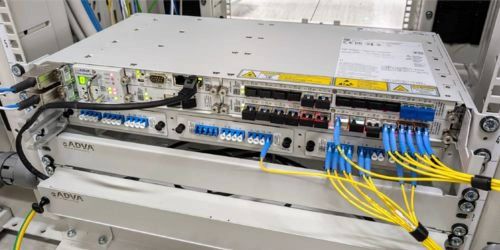
A significant portion of the session focused on network operations and the modernisation of Defence infrastructure. 233 (Global Communications Networks) Signal Squadron provided insight into how capability upgrades and improved assurance measures are enhancing the resilience and performance of operational communications.
Speakers emphasised the importance of robust, secure and scalable networks in enabling operational success. As reliance on digital systems continues to grow, so too does the need for infrastructure that can withstand both technical failure and adversarial disruption.
Delivering global support and interoperability
The role of 259 (Global Information Support) Signal Squadron demonstrated the Regiment’s global reach. From supporting maritime operations to maintaining logistical information systems and enabling interoperability with allies, the Regiment provides essential support across Defence.
This global perspective reinforced the importance of integration - not just within UK Defence, but across coalition partners. Ensuring interoperability and readiness is fundamental to delivering effective information advantage in modern operations.
Training, development and future readiness
Training and development were also central to the discussion. The Regiment continues to invest in building the skills required to operate in a complex cyber environment, with initiatives aligned to evolving operational requirements.
Speakers highlighted the importance of developing both technical expertise and operational understanding, ensuring personnel are equipped to respond to real-world challenges. This includes adapting training approaches to reflect the pace of technological change and the nature of modern threats.
Looking ahead, the planned relocation of the Regiment to a new, purpose-built facility by 2030 was presented as a key milestone. This move will enhance infrastructure, improve operational efficiency, and ensure the Regiment remains at the cutting edge of capability.
The session concluded with a clear message: Defensive Cyber Operations are fundamental to modern military effectiveness. As threats continue to evolve, so too must the capabilities, structures, and partnerships that underpin cyber defence.