“Seeing is believing” may feel like an overused phrase in an age of deep fakes and misinformation, but it remains an apt way to describe Defence Cyber Marvel (DCM) 2026. For many, “cyber” is an abstract concept, something discussed in headlines or PowerPoint slides but rarely fully understood. Yet DCM brings that invisible battlefield to life, showing just how real and immediate the threat has become.
Now in its ninth iteration, Defence Cyber Marvel began as a grassroots initiative led by a handful of passionate members of the Royal Signals. What started as a small, Corps-driven idea has evolved into one of Defence’s most ambitious and influential cyber exercises. The Royal Signals have remained at the heart of its organisation and delivery planning, coordinating, and driving the exercise forward year after year, while continuing to champion innovation in cyber training across Defence.
Fast forward to 2026, and that small idea has grown into the UK’s largest multinational defensive cyber exercise, bought together around 2,500 personnel from Defence, 10 government departments and over 70 organisations. Operating across 19 global locations, it demonstrates the critical importance of international collaboration in countering borderless cyber threats.
Led by Cyber and Specialist Operations Command (CSOC) and supported by the Ministry of Defence, this year’s exercise was centred in Singapore for the first time highlighting the UK’s commitment to strengthening cyber partnerships in the Indo-Pacific. The involvement of Singaporean partners proved vital, providing both infrastructure and expertise to support an exercise of this scale.
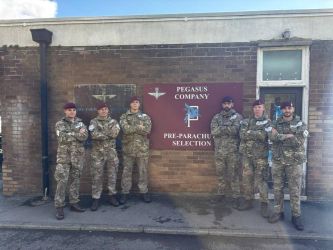
Participants came from across UK Defence and beyond, including the Royal Navy, Parachute Regiment, Royal Engineers, NHS, and other government departments. Every Royal Signals unit that took part, helping to reinforce the Corps’ central role in Defence cyber capability. Teams were deployed worldwide, from Mongolia and Thailand to Brazil, Kenya, Japan, and Italy, working alongside international allies in complex, multi-faceted and innovative exercise that provided an unparalleled opportunity to develop Defensive Cyber Operations (DCO) KSE in a safe-to fail and legally permissive virtual environment.
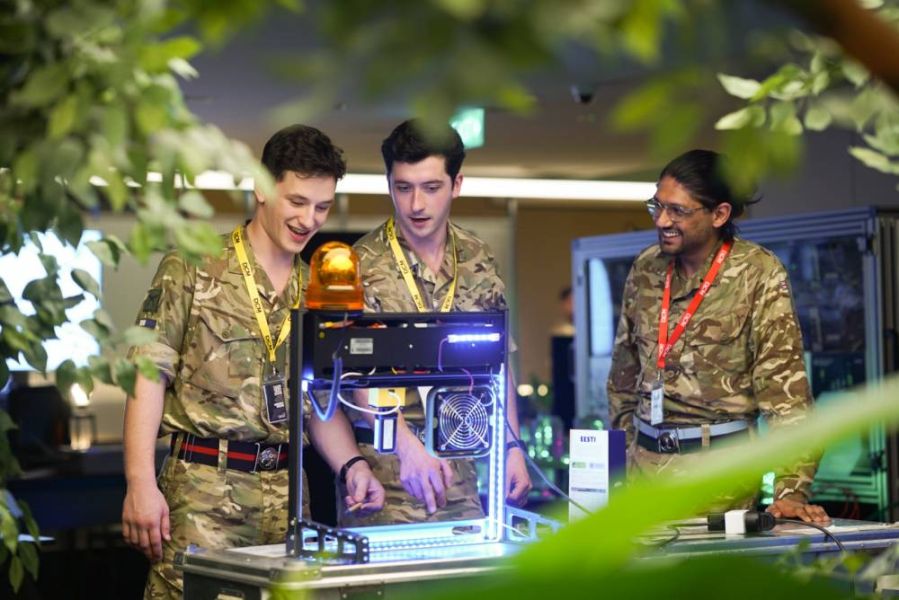
Generally, two units would put in 10 people each to form a team, typically around 20 personnel, combined experienced soldiers with junior officers and those fresh from training. They were tested across a range of cutting-edge challenges, including artificial intelligence, quantum technologies, and simulated cyber-attacks. These scenarios reflected real-world threats reminding participants that cyber warfare is not a future risk, but a present reality.
An exercise organiser explained: “DCM 2026 is about more than technical ability it’s about building trust across nations and preparing our people to operate in a domain where the threat is constant and borderless. The Royal Signals have been instrumental in making this exercise what it is today, and we want to see even more soldiers step forward and be a part of it next year.”
For those on the ground, the experience was equally impactful. A soldier deployed to Mongolia said: “Working with international partners in such a realistic environment pushed us beyond anything we’d experienced before. It’s not just training it’s preparation for what we could face tomorrow.”
The competition element remained fierce. The team from DE&S working with the Barbarians claimed first place, followed by 21 Signal Regiment who were paired with the Ukrainian team in second. Third place was secured by 16 Signal Regiment alongside a Saudi team demonstrating the strength of multinational collaboration.
To put DCM into context, exercises like Warfighter involve around 2,000 personnel and primarily focus on US collaboration. In contrast, DCM spans 29 countries and integrates military, government, and industry partners on an even larger scale.
Ultimately, Defence Cyber Marvel 2026 highlights a fundamental shift in warfare. The cyber domain is no longer secondary it is central. Through the leadership and vision of the Royal Signals, this exercise has become something truly unique there is nothing else like it in Defence. As it continues to grow, the message is clear: this is something you have to see to believe, and next year offers an even greater opportunity for more soldiers to get involved, develop their skills, and be part of the future of warfare.
Article from Spring Edition of The Wire 2026